
High‑voltage testing demands components that ensure safety, reliability and long‑term performance. Reed relays are engineered for these conditions, delivering high isolation voltage, exceptional insulation resistance, low ON resistance and low capacitance. Their ability to switch everything from micro‑level signals to high‑power loads enables precise measurements across vast high‑voltage test systems.
If there are particular areas you need help with, feel free to skip to any of the following sections:
- High-Voltage Cable Testers Demand Reliable Switching
- Focus Application: Cable Testers or Electronic Harness Testers
- Key Features for Cable Testing
- Overall High Voltage Testing Capabilities
- Conclusion
High-Voltage Cable Testers Demand Reliable Switching
High voltage testing is a critical process for ensuring the reliability, safety, and longevity of electronic systems and components. Reed relays are specifically engineered to meet the stringent demands of such applications, offering key characteristics such as very high isolation voltage and insulation resistance both across the open contacts and between the coil and contact. Furthermore, reed relays provide very low ON resistance, low capacitance and the ability to reliably switch loads ranging from micro to high levels. These capabilities are essential for enabling measurements that span several orders of magnitude, from nanovolts to kilovolts and femtoamps to amps.
Check out the full list
of Standex’s testing
and certifications:
of Standex’s testing
and certifications:
- AEC-Q200
- IEC 60810-4
- IEC 60601-1
- IEC 62109-1/2
- IEC 60664-1
- ISO 6469-3
- IEC 60255-27
- UL Listed
- RohS, REACH
Focus Application: Cable Testers or Electronic Harness Testers
In modern vehicles, especially EVs, cable harnesses carry high-voltage power and signals across complex systems. Even minor defects like insulation damage or partial breaks can compromise safety and performance.
High-voltage cable testers are essential for detecting such faults and ensuring the reliability of automotive electrical systems.
High-Voltage Testing for Cable Shorts
Reed relays are critical in applying thousands of volts (e.g., up to 10 kVDC switching and 15 – 20 kVDC standoff voltage across contacts) to identify potential cable shorts. This test method of “each wire to all other wires”, also known as “matrix scanning”, with high voltage is a standard practice to detect shorts or weak insulation that low-voltage methods could miss.
High-Current Testing for Partial Cable Breaks
Additionally, these relays can facilitate the application of high current through the wires (e.g., up to 5 amps on a continuous 100% basis, with even higher short-duration pulsed currents possible) to detect partially cut wires, which could otherwise lead to complete breaks and catastrophic failures.
For a particularly challenging test and measurement application that required a compact high voltage relay (5 kV AC / 7kV peak withstand) in a small package for testing insulation characteristics and partial discharge, a unique solution was developed. This involves a new reed relay design (MRE Series) with two reed switches internally connected in series, achieving the required performance while maintaining a compact size of 30 mm x 10 mm assembly area. This internal series connection of switches, typically not offered by other suppliers, makes the relay more robust and easier to integrate into designs where the high voltage isolation and creepage distance requirements, together with space constraints are a concern on the circuit board.
~ David Stastny, Product Manager Relays

Key Features for Cable Testing
1) High-Voltage Capability
High voltage reed relays can switch up to 10,000 volts and withstand up to 15,000 volts across their contacts. Certain series, such as the H, HE, and HM, can switch up to 10 kVDC and provide up to 20 kVDC isolation. Relays can also hold off 15,000 volts between the switch and the coil.
2) High-Current Capability
These relays are capable of carrying high currents up to 5 amps continuously (100% duty cycle), with short-duration pulsed currents potentially even higher. For example, the HE/HM series can carry up to 5 Amps continuously and 10 Amps for several milliseconds. Some use cases proved that for the microsecond range the pulsed current can go even up to higher tens or lower hundreds of amperes.
3) High Insulation Resistance
They feature high insulation resistance, typically greater than 10^13 Ohms (10 TOhm), a customised relay can reach even above 500 TOhm insulation resistance.
4) Reliability and Longevity
Reed relay matrices are reliably used in cable testers and are capable of several hundred million operations for cold switching. They operate reliably across a wide temperature range and offer an economical solution for performing switching operations.
5) Robustness
Reed relays utilise hermetically sealed reed switches which are further packaged in strong, high-strength resin and plastic, ensuring reliability even when subjected to various environments.
6) Multiple Configurations
They are available in various packages and pin configurations, allowing for multiple switches (normally
open and normally closed contacts) and high voltage lead wire for ‘sky wiring’.
Overall High Voltage Testing Capabilities
Beyond cable testers, reed relays are integral to a wide array of high voltage test and measurement applications, enabling measurements that cover several orders of magnitude, from nanovolts to kilovolts and femtoamps to amps.
1. Broad Voltage Range
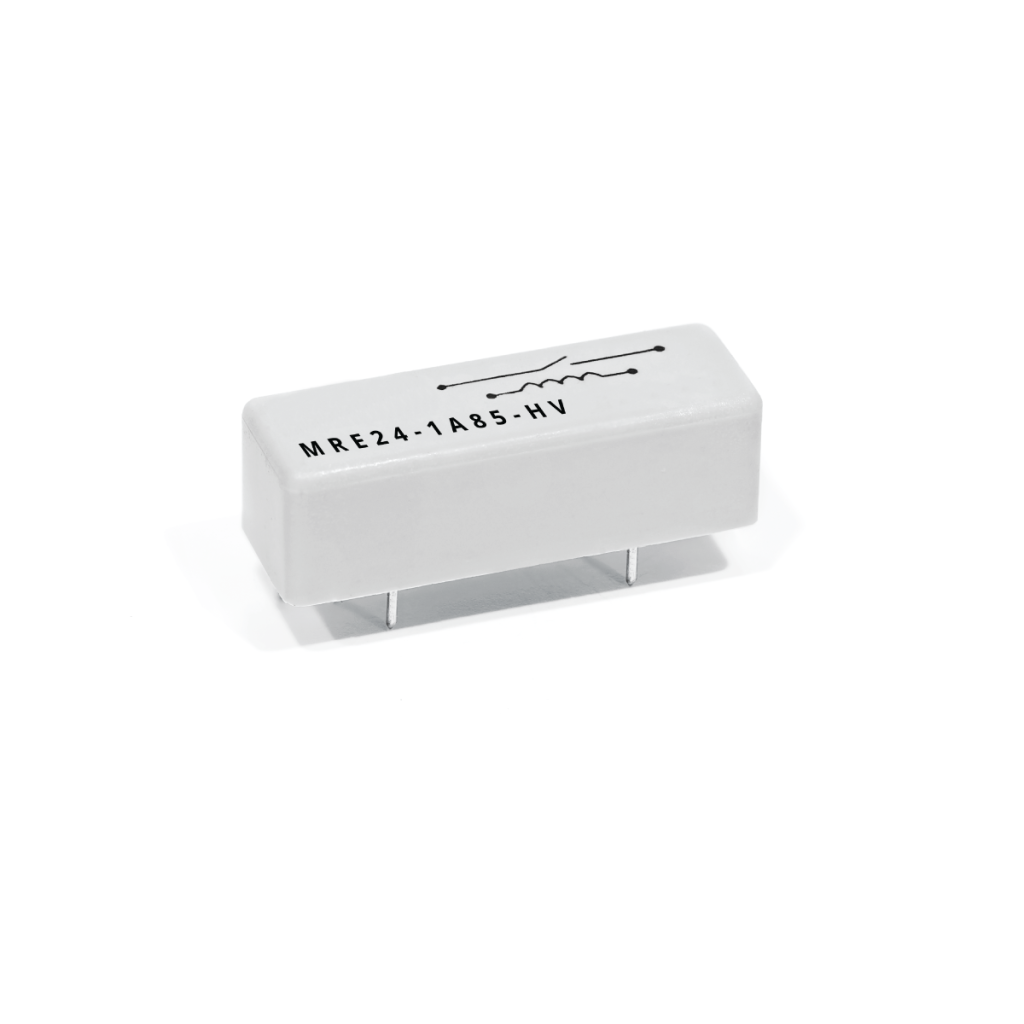
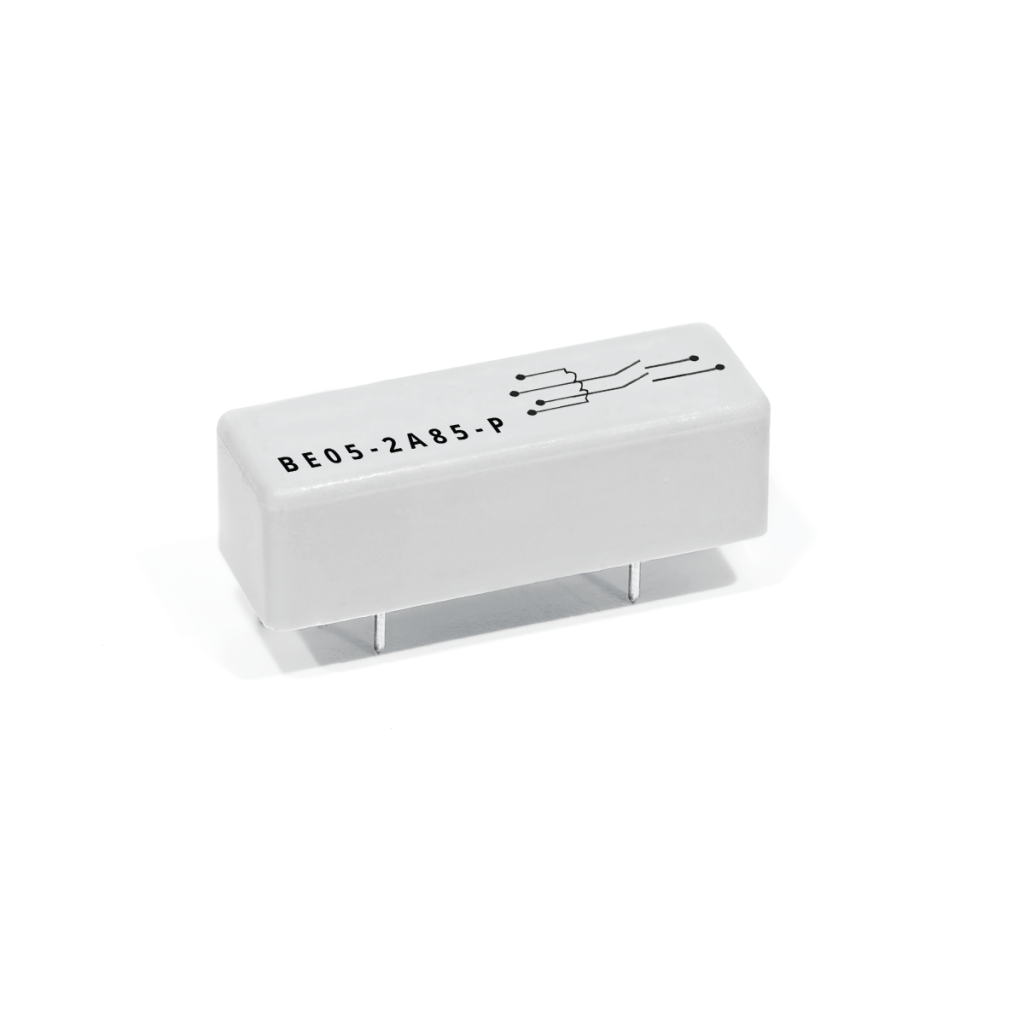
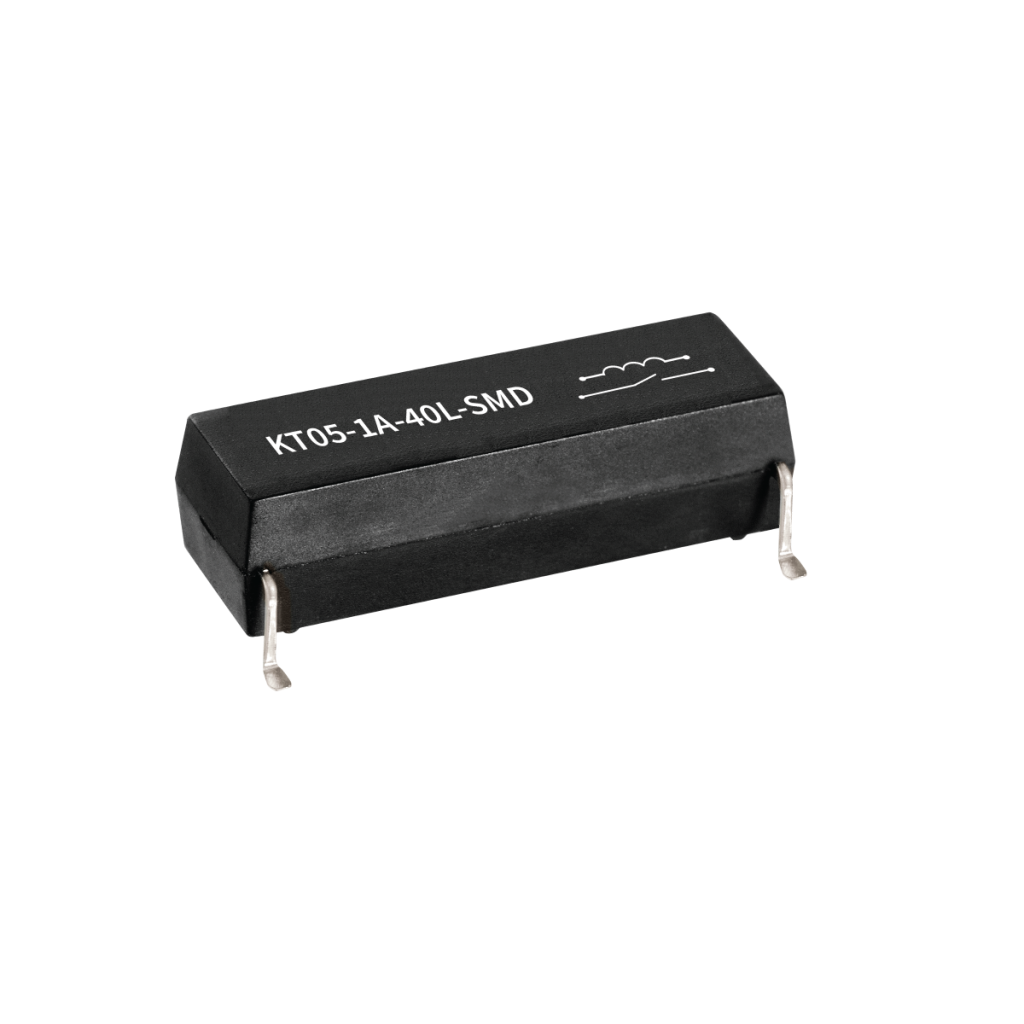
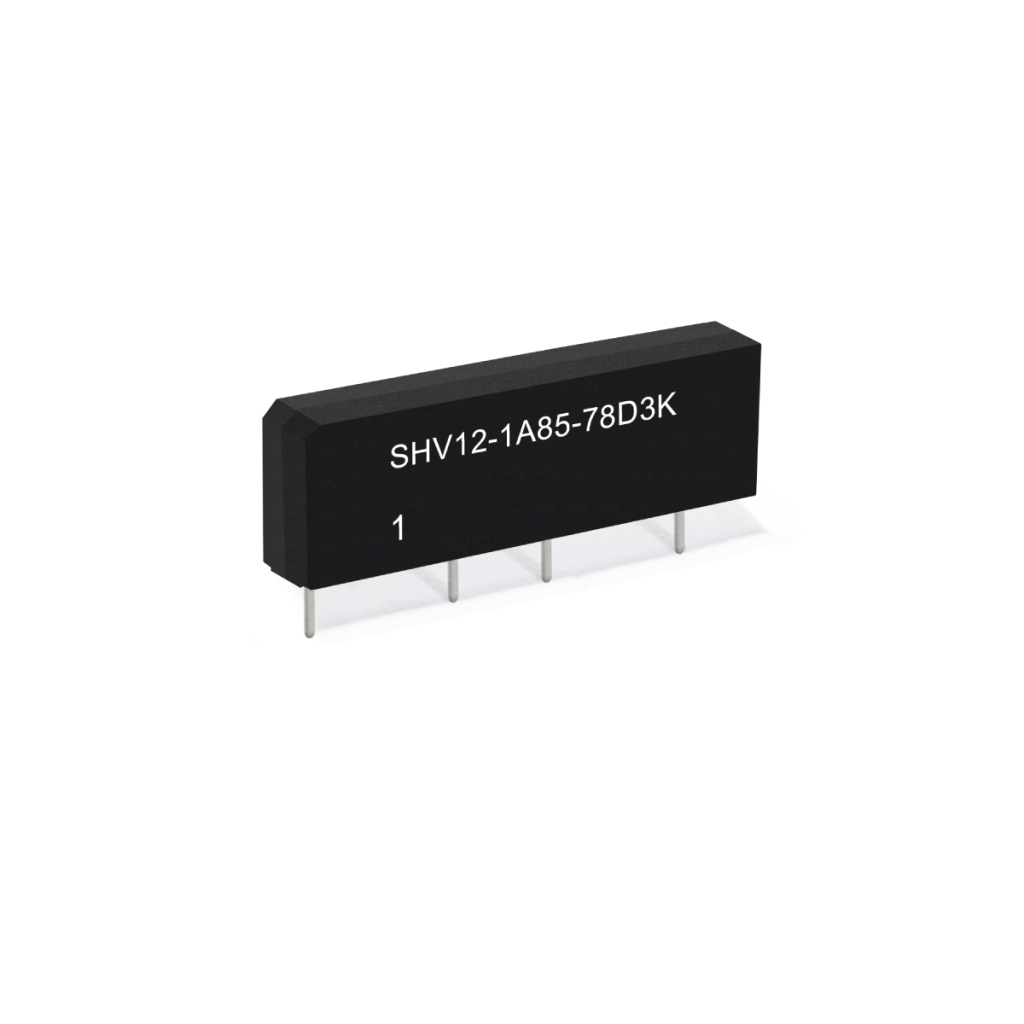
Switching voltages are available up to 10 kVDC, with breakdown voltages and dielectric strength extending up to 15 kVDC. For instance, the KT Series are surface mount reed relays that switch voltages up to 1.5 kVDC and provide high isolation up to 7 kVDC. The BH series can switch up to 1 kVDC and offers a breakdown voltage of 3 kVDC and low leakage currents across open contacts. The LI, SHV, and BE series provide high breakdown voltage up to 4 kVDC and switching up to 1 kVDC, suitable for closely stacked matrices. The SHV series specifically is ideal for high density assembly while maintaining great high voltage performance.
2. Current Handling
Reed relays are capable of switching currents up to 3 A and carrying currents up to 5 A continuously, with
pulsed currents up to 10 A.
3. Exceptional Isolation
Exceptional Isolation: They provide perfect isolation between the control and load circuit. High Insulation Resistance can exceed
10^15 Ω. The BH series specifically features high IR up to 10 TOhm (10^13 Ω) across open contacts and contact to coil. The LI and KT series also boast high IR greater than 10^13 Ω. This high insulation resistance results in very low leakage current, typically in the picoamp range.
4. Low Thermal Offset Voltage
Critical for precise measurements, special BT relays offer low thermal offset voltage of less than 1μV.
5. Fast Operation
Operating times are typically in the 500 μs to 1 ms range.
6. Hermetically Sealed Switches
The hermetically sealed switches, often with potted encapsulation or rugged thermoset moulding, ensure reliability across a wide temperature range and suitability for various environments, including dusty or potentially explosive atmospheres, by being fundamentally safe.
7. High-Density Applications
Many series, including CRR, SIL, MS, UMS, RM, MF, MFS and SHV, are designed for large and closely stacked switching matrices.
8. Optocouplers
For specific High Isolation and Intrinsically Safe (ATEX & IECEx) applications, optocouplers are available to galvanically isolate low-voltage devices from high-voltage circuits.
Optocouplers
Intrinsically Safe Optocouplers
Reed relays offer superior functionality, longevity, and reliability for demanding high voltage test and measurement applications. Their versatility allows for customised solutions to meet unique switching and sensing requirements.
High Voltage Isolation

Conclusion
High‑voltage reed relays remain a foundational switching technology for cable and harness testers, delivering the isolation, insulation resistance, and voltage handling required for accurate fault detection across complex test matrices. Their ability to switch up to 10 kVDC, withstand 15 to 20 kVDC, carry continuous currents up to 5 A, and maintain insulation resistance in the 10^13 to 10^15 Ω range ensures robust performance in both high‑voltage and high‑current test workflows. The availability of compact, series‑connected designs such as the MRE Series and high‑density relay families supports modern PCB constraints while maintaining required creepage and clearance distances.
With hermetically sealed switches, low thermal offset options, and proven longevity across hundreds of millions of cycles, Standex Detect relays provide engineers with dependable, low‑leakage switching essential for precise measurement from femtoamps to amps and nanovolts to kilovolts. As testing demands increase, Standex continues advancing relay capability to support next‑generation high‑voltage test and measurement systems.
Related Articles
-

Core Sensing Technologies Driving Industry 4.0 Warehousing: An Engineer’s Technical Guide
Industry 4.0 warehouses rely on robust sensing technologies that ensure precise, real-time control of AGVs, AMRs, conveyors, and robotic systems. Reed switches, Hall Effect sensors, and gear tooth sensors provide reliable detection, motion feedback, and rotational data even in harsh industrial environments. Supporting components like reed relays and optocouplers maintain clean, isolated signal paths across…
-
Silent Protectors: Monitoring Critical Insulation Measurements in Medical and Energy Systems
Reed relays play a crucial role in maintaining safe, reliable insulation within high‑voltage medical and energy storage systems, where precision and protection are essential. Their high breakdown voltage, exceptional isolation, and low leakage current make them ideal for monitoring dielectric strength and preventing hazardous system failures. As voltages rise in technologies like advanced medical devices…
-
RF Reed Relays for SoC Testers
As today’s SoC devices push further into multi‑GHz RF, multi‑Gbps digital, and precision analog domains, the pressure on test systems to deliver clean, repeatable measurements has never been greater. At the heart of this performance is reliable signal switching and that’s where RF reed relays stand apart.
-
Enabling Safe and Efficient High-Voltage Electrical Systems: High-Voltage Reed Relays in Pre-charge Circuits
Pre-charge circuits prevent damaging inrush currents during start-up in EVs and energy storage systems. Reed relays make these circuits faster, safer, and more reliable with high-voltage tolerance, compact design, and long life, ideal for modern electrification.